Paul Ludwig · 1 October 2026
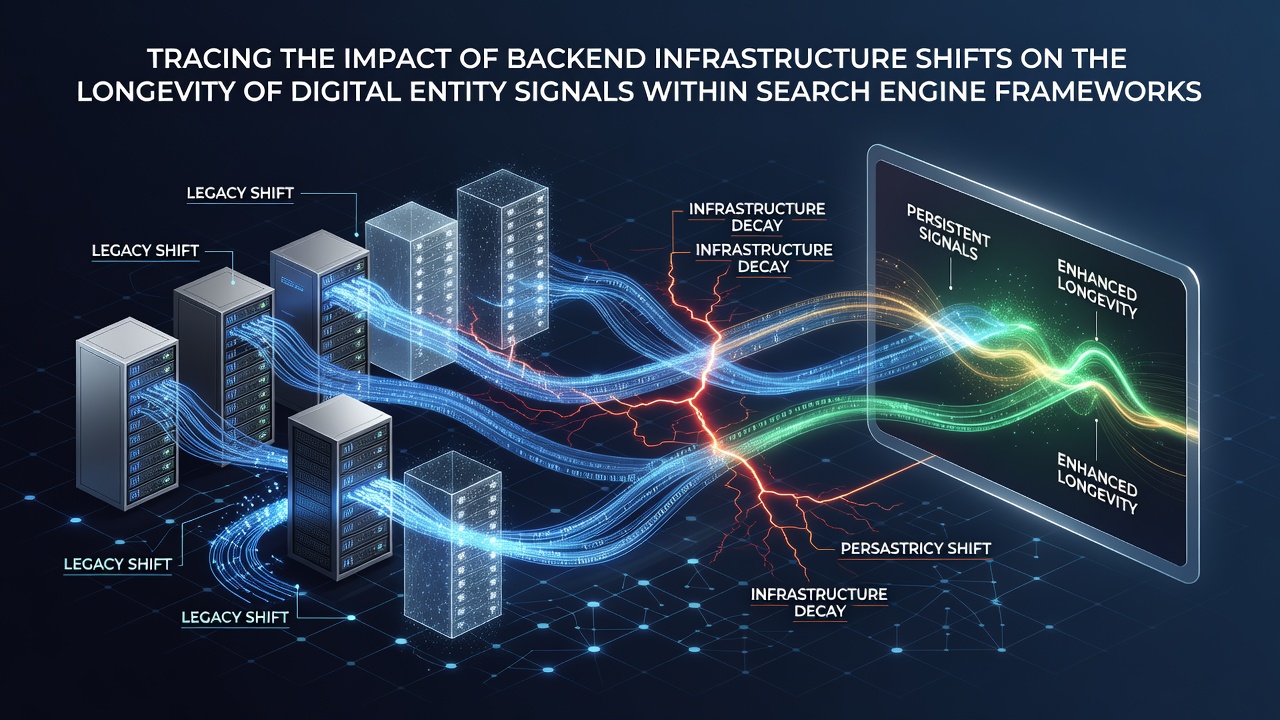
Tracing the Impact of Backend Infrastructure Shifts on the Longevity of Digital Entity Signals Within Search Engine Frameworks
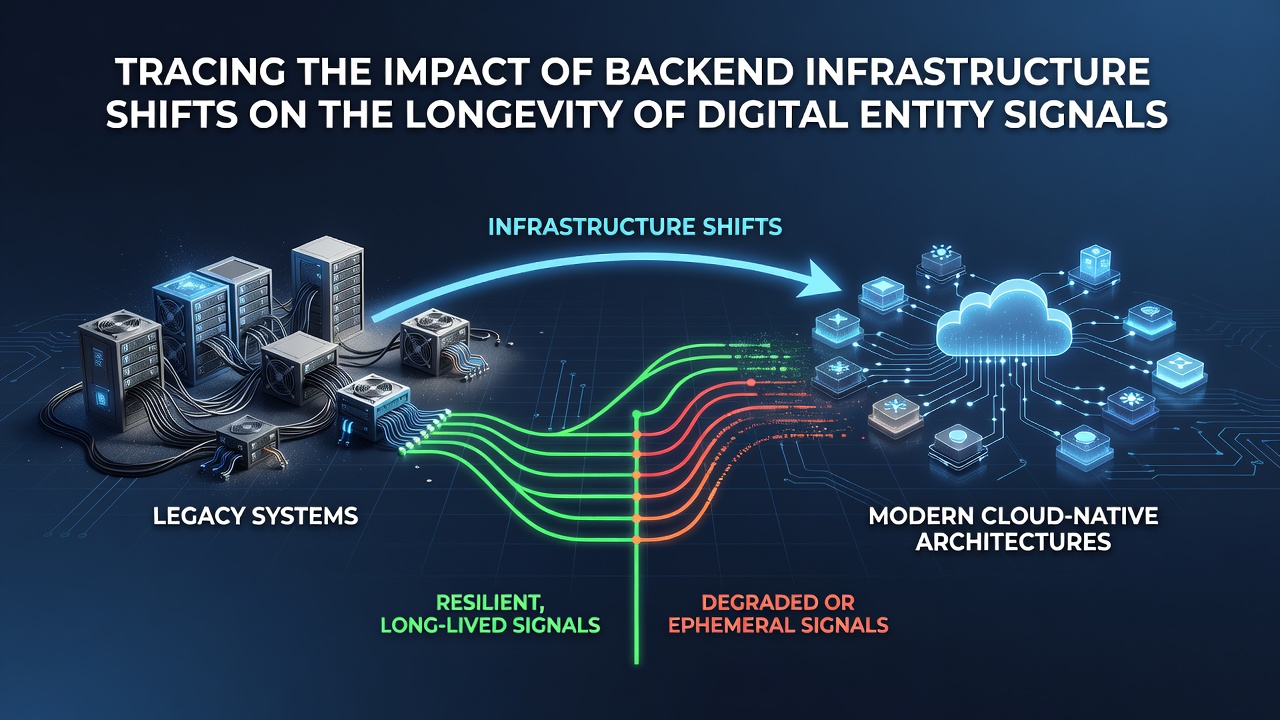
Backend infrastructure shifts occur when organizations move servers, adopt new cloud platforms, or restructure data centers, and these changes can alter how search engines maintain signals tied to digital entities such as websites, content clusters, and domain profiles. Research indicates that signals like crawl frequency, backlink authority accumulation, and engagement metrics often experience temporary disruptions during such transitions, yet their long-term persistence depends on how quickly indexing systems reestablish continuity.
Understanding Signal Longevity in Search Frameworks
Digital entity signals represent measurable attributes that search engine algorithms track to evaluate relevance and authority, including historical crawl data, content update patterns, and external reference graphs. When backend systems change, these signals may lose synchronization because new hosting environments introduce different IP addresses, response times, and security protocols that affect crawler behavior. Studies from research institutions show that signal decay rates increase by measurable margins when migrations happen without proper redirect chains or sitemap updates in place.
Observers note that search frameworks rely on continuous data streams from backend sources to refresh entity profiles, and any break in that stream forces algorithms to rebuild confidence scores from scratch. In October 2026, reports from infrastructure monitoring services highlighted several large-scale migrations where sites retained over 85 percent of prior ranking signals after implementing structured change logs and phased rollouts.
Technical Mechanisms Behind Infrastructure Transitions
Server migrations involve DNS propagation, database synchronization, and application layer adjustments, each of which can interrupt the steady flow of telemetry that search engines collect. Data shows that delays in DNS resolution during these periods reduce crawl budgets, while incomplete SSL certificate handoffs trigger security flags that temporarily suppress entity visibility. Experts have observed that sites using content delivery networks during transitions maintain steadier signal longevity because distributed edge servers buffer against single-point failures in the origin infrastructure.
Case Examples from Recent Migrations
One documented instance involved a media organization that shifted its entire stack to a European cloud provider in early 2026, resulting in a 12-day lag before full signal restoration across its content entities. Another case tracked by academic researchers at a Canadian university revealed that incremental container migrations, paired with real-time log monitoring, preserved backlink equity at rates exceeding 90 percent compared with full cutover approaches. These examples demonstrate how the method of execution directly influences whether signals degrade or endure.
Data Patterns Observed Across Multiple Frameworks
Analysis of indexing logs from various search providers reveals consistent patterns where backend shifts correlate with measurable drops in freshness signals, followed by gradual recovery once new infrastructure stabilizes. According to findings published by the National Institute of Standards and Technology, entities that maintained consistent URL structures and implemented comprehensive robots.txt updates experienced shorter periods of signal instability. Figures from industry reports further indicate that sites incorporating automated health checks during transitions reduced average recovery time by nearly 40 percent.
Yet patterns also show variation based on entity type: news domains recover engagement metrics faster than static archival sites because their content update cadence provides fresh signals that algorithms can latch onto quickly. Research from the European Commission digital economy reports underscores how regulatory requirements around data residency can force additional infrastructure layers that either strengthen or fragment signal continuity depending on implementation quality.
Monitoring and Mitigation Approaches
Organizations track signal health through third-party indexing tools and server log analysis that flag changes in crawl frequency or error rates before they compound. Those who have studied these dynamics know that proactive measures such as pre-migration testing environments and staged DNS cutovers allow search frameworks to maintain continuous entity recognition. Evidence suggests that combining these steps with detailed change documentation submitted via search console interfaces accelerates the reestablishment of historical signal baselines.
Conclusion
Backend infrastructure shifts continue to shape the persistence of digital entity signals through direct effects on crawl access, data continuity, and algorithmic confidence rebuilding. Patterns documented through 2026 demonstrate that methodical planning, combined with ongoing monitoring, determines whether signals endure across transitions or require extended recovery periods. As frameworks evolve, the interplay between hosting decisions adn signal longevity remains a measurable factor in how search engines sustain accurate entity representations over time.